Huntington Desert Garden (San Marino, California)
Transparency: This article may contain affiliate links. If you purchase through them, I may earn a small commission at no additional cost to you.
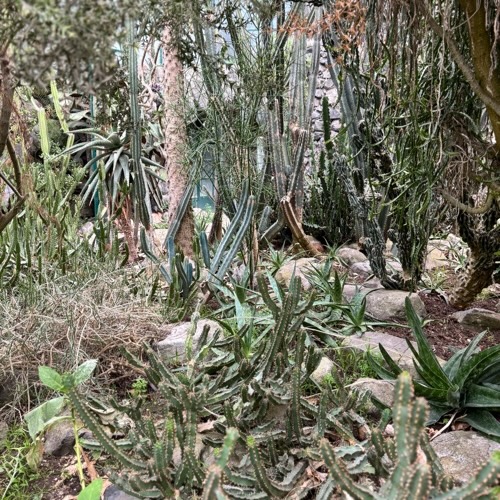
Disclosure →The Huntington Desert Garden is a part of The Huntington Library, Art Collections, and Botanical Gardens in San Marino, California. It's a massive and ancient collection that features lots of cacti, succulents, and other desert plants from all over the world.
History of Huntington Desert Garden
The Huntington Desert Garden, established in 1907, forms part of the Huntington Library, Art Museum, and Botanical Gardens in San Marino, California. Spanning 10 acres, it proudly displays one of the world's largest and oldest collections of desert plants.
Featuring flora from extreme environments, many specimens were acquired by Henry E. Huntington and William Hertrich (the first garden curator) during trips to several countries in North, Central, and South America.
According to Wikipedia, Mr. Huntington wasn't initially keen on establishing a Desert Garden due to his aversion to cacti, stemming from unfortunate encounters with prickly pears during railroad construction. However, Hertrich's persistence eventually convinced Mr. Huntington, leading him to build a railway spur to the garden for transporting rocks, soil, and plants. As Gary Lyons, a later curator, noted, having a rail spur and deep pockets was very convenient for building such a vast garden. A trip to Arizona in 1908 filled three railroad cars for the return to the garden.
Initially focused on arid-land plants and cacti, the garden expanded over time to house an extensive variety of succulents. Its diverse collection showcases over 5,000 species of desert plants from various regions worldwide, including North and South America, Africa, and the Middle East.
Plant Varieties in Huntington Desert Garden
The Huntington Desert Garden is a treasure trove for succulent enthusiasts, featuring an array of impressive specimens. Visitors can marvel at a wide assortment of cacti, agaves, aloes, echeverias, and other succulent varieties, both rare and common.
Agave and Related Genera (Agavaceae)
- Huntington boasts the largest Yucca filifera in the world.
- Beaucarnea, Ponytail "Palms", among the oldest specimens.
Aloe (Aloaceae)
- About 200 of the world's 300 species of aloes reside in the upper garden.
- Notable display: Aloe arborescens with fiery red flower stalks.
- Aloidendron barberae, reaching fifty feet high, is the tallest.
Terrestrial Bromeliads (Bromeliaceae)
- Puyas put on a spectacular floral display in April and early May.
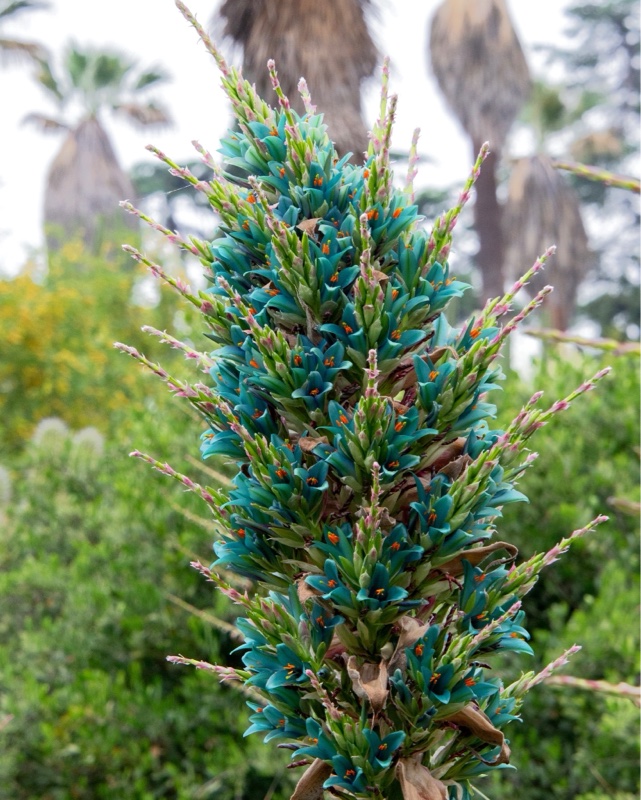 Puya alpestris at the Huntington Desert Garden
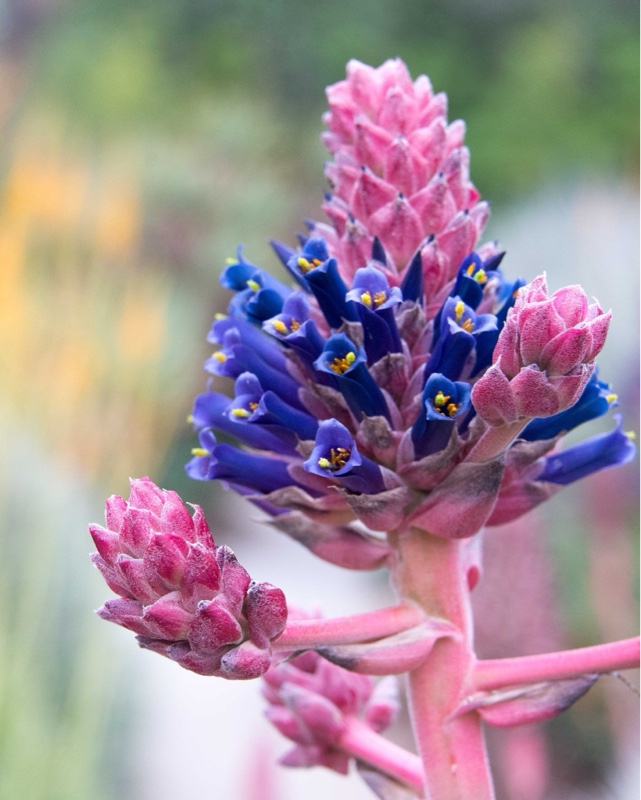 Puya venusta at the Huntington Desert Garden
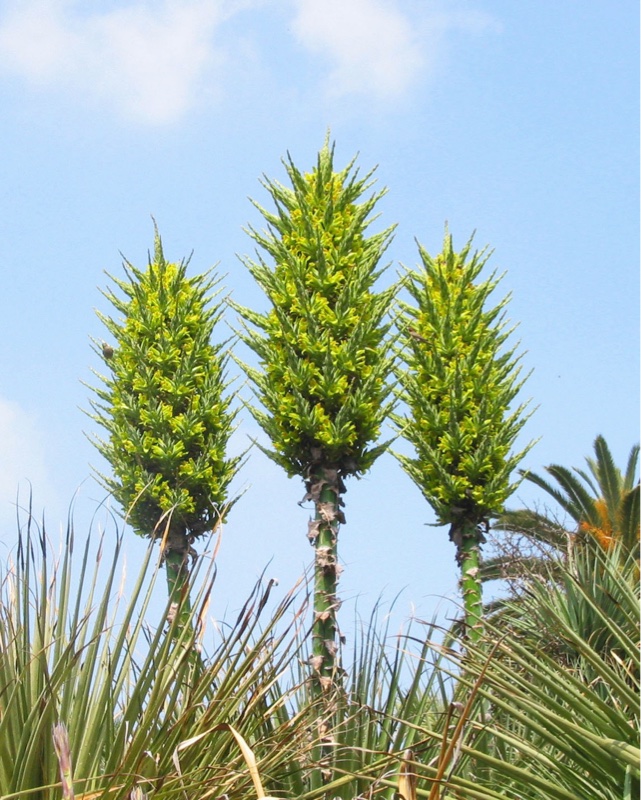 Puya chilensis at the Huntington Desert Garden
Cacti (Cactaceae)
- Cereus xanthocarpus, at twenty tons, is the garden's most massive plant.
- Spectacular display of 500+ bright yellow-spined Golden Barrel Cactus (Echinocactus grusonii).
Echeveria, Crassula, Sedum, and Related Genera of Succulents (Crassulaceae)
- Cool autumn brings out pastel leaf colors in various leaf succulents.
Euphorbia (Euphorbiaceae)
- Crown of Thorns (Euphorbia milii), a familiar house plant, produces colorful bracts throughout the year.
Fouquieria (Fouquieriaceae)
- Strange-looking boojum trees (Fouquieria columnaris) native to Baja California.
- The central garden is landscaped with numerous fouquierias from Mexico with bright red blossoms most of the year.
Living Stones (Lithops)
- Largest collection in America of small southern African plants.
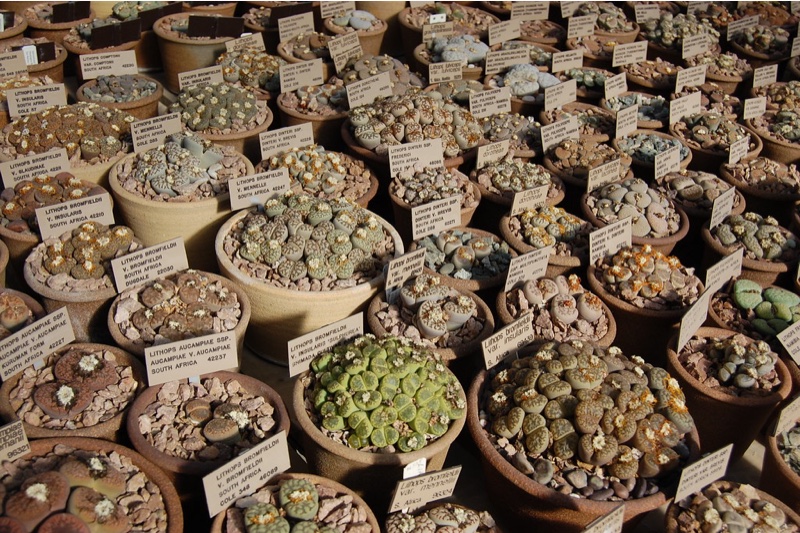 Lithops (Source)
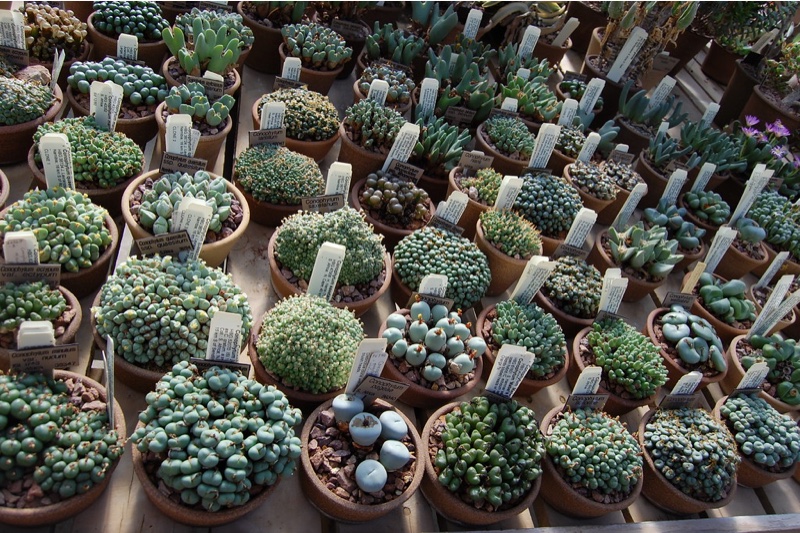 Conophytum (Source)
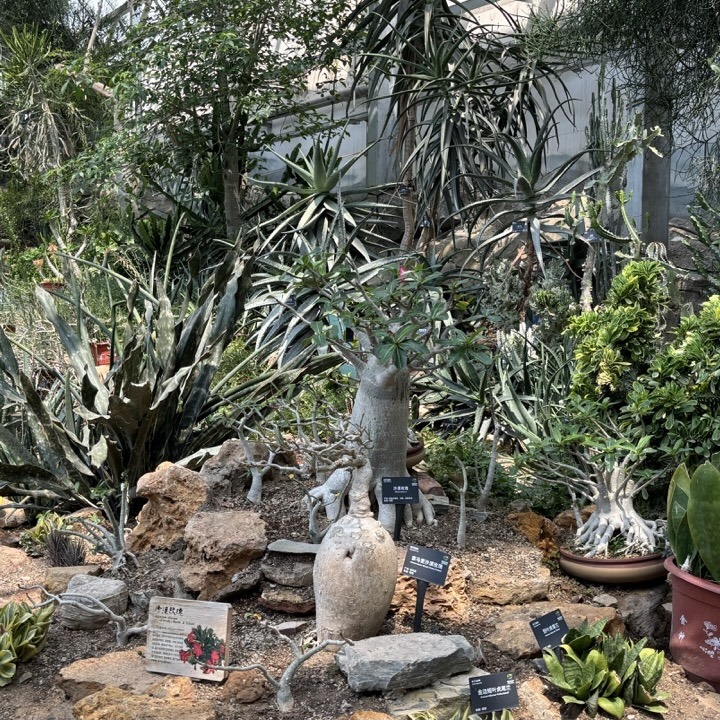
Caudiciform Plants
- Enormous specimen of Dioscorea elephantipes.
- These plants produce very thick stems serving as a water storage structure known as a caudex.
Personal Experience
In late October, I visited friends in Southern California. They suggested going to the Huntington Gardens, which turned out to be a whole day of fun exploring. My favorite part was The Desert Garden, filled with beautiful cacti and succulents along winding paths. It was like discovering a new world with every turn.
While I was there, I saw lots of Puya plants all together. I hadn't noticed them before, but now I'm really into growing Puyas in my garden. Seeing them in large groups was amazing, especially since I have three Puyas at home—Puya chilensis, Puya mirablis, and Puya dyckiodies—that I care for in different ways. It was exciting to see so many of them in one place!
If you're ever in Southern California and haven't been to this garden, you should definitely check it out. There are also cool Japanese and Chinese gardens there!